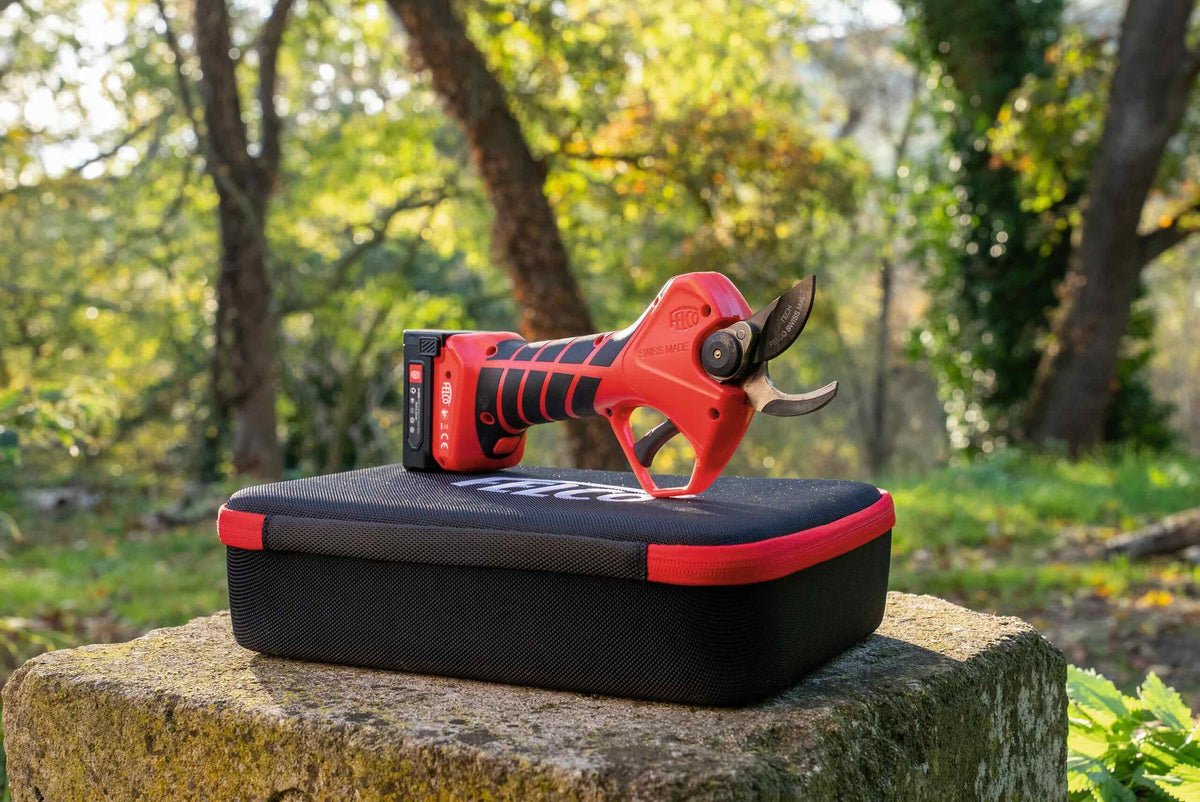
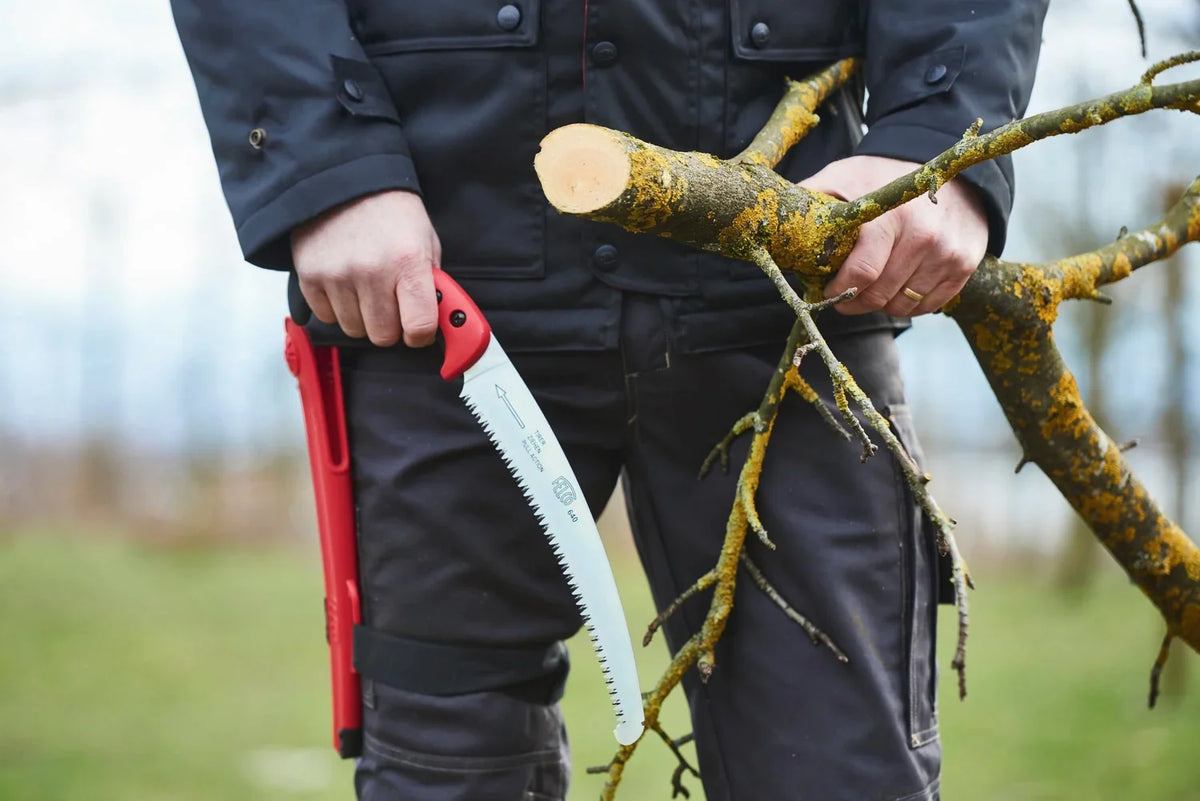
A lopper fills the gap between pruning shears and a pruning saw.
It gives you the reach and leverage needed to cut branches that are too thick for hand pruners. Whether you are clearing an overgrown shrub, maintaining fruit trees, or shaping young trees, the right lopper helps you make clean, controlled cuts without reaching for a saw too soon.
This guide will help you choose the best lopper for the branches you cut, the space you work in, and the level of leverage you need.
How to Choose the Right Lopper?
Selecting the right lopper involves more than simply choosing the largest one.
You need to consider the cutting type, mechanism, handle length, and overall comfort, as all these factors affect how the tool performs.

✓ Cutting Type
The most important choice is between bypass and anvil loppers.
Bypass loppers have two blades that move past each other like scissors. They make a clean cut that is ideal for live wood and supports healthy regrowth.
Anvil loppers have a single blade that closes onto a flat surface. They can crush softer stems, so they are best reserved for dead or dry wood.
✓ Cutting Mechanism
Geared or ratchet systems multiply the force you apply, making it easier to cut through thick branches. While effective, they can also add weight and complexity.
A well-designed traditional lopper often provides enough power without these additional systems.
✓ Handle Length and Leverage
Longer handles provide more power for cutting thick branches, but they can be difficult to use in tight spaces.
Shorter handles offer greater control and are easier to manage for precise work or pruning inside dense shrubs.
✓ Comfort and Maintenance
Look for comfortable grips, effective shock absorbers, and a balanced design that helps reduce fatigue.
Choose loppers with high-quality blades that can be sharpened and with parts that can be replaced when needed. This allows you to maintain the tool instead of replacing it when one component becomes worn.
FELCO Loppers at a Glance
From compact control to maximum leverage and extended reach, FELCO offers a purpose-built solution for every pruning challenge.
Compare our top loppers and find the model that best fits the way you work.
| Model | Best for | Cutting capacity | Total length | Key advantage |
|---|---|---|---|---|
| FELCO 22 | Thick branches | 1.77 in (4.5 cm) | 33.07 in (84 cm) | Maximum leverage |
| FELCO 21 | Heavy pruning with easier handling | 1.38 in (3.5 cm) | 24.8 in (63 cm) | Balance of power and control |
| FELCO 201-40 | Tight spaces and everyday pruning | 1.38 in (3.5 cm) | 15.75 in (40 cm) | Narrow cutting head |
| FELCO 211-40 | Everyday pruning with better branch hold | 1.38 in (3.5 cm) | 15.75 in (40 cm) | Curved cutting head |
| FELCO 290 | Lower canopy work | 1.38 in (3.5 cm) | 66.14 in (168 cm) | Telescopic reach |
| FELCO 290-4M | Taller trees | 1.38 in (3.5 cm) | 91.34 in (232 cm) | Extended reach |
Best Loppers for Thick Branches
Thick, dense branches require a tool that provides strong leverage without sacrificing the quality of the cut.
FELCO 22
For demanding pruning work, the FELCO 22 provides a cutting capacity of 1.77 inches (45 mm) and has a total length of 33.07 inches (84 cm).
The extra handle length provides strong leverage for thicker branches. Its robust construction supports demanding use, while the precision blade helps maintain a clean cut.

Tip: Choose the FELCO 22 when maximum leverage and cutting capacity are the main priorities.
FELCO 21
For branches up to 1.38 inches (35 mm), the FELCO 21 offers a balance of power and easier handling.
Its straight cutting head and ergonomic design make it a strong but manageable option for substantial pruning tasks.

Tip: Choose the FELCO 21 when you need good cutting power without the size of the FELCO 22.
Best Lightweight Loppers for Everyday Use
For regular pruning or long working sessions, reducing fatigue is essential.
These models are useful for managing shrubs, maintaining orchards or vineyards, and working in areas where control matters more than maximum leverage.
FELCO 201-40 and FELCO 211-40
The FELCO 201-40 and FELCO 211-40 are designed for everyday pruning and can cut branches up to 1.38 inches (35 mm).
Both models have a compact total length of 15.75 inches (40 cm), making them easier to control in dense shrubs and confined spaces.

→ The FELCO 201-40 has a narrow cutting head that helps with access in tight spaces.
→ The FELCO 211-40 has a curved cutting head that helps hold the branch in position during the cut.
Need More Reach? Consider a Pole Pruner
For taller shrubs or lower tree branches, a pole pruner may be more suitable than a standard lopper.
Pole pruners provide extra reach and allow you to work from the ground, reducing the need to use a ladder or overreach.
FELCO 290
The FELCO 290 combines a telescopic aluminum pole, rotating cutting head, and pulley-assisted system.
It offers a cutting capacity of 1.38 inches (35 mm) and extends to a working reach of up to 8.76 feet (2.67 m). This makes it suitable for controlled pruning in the lower canopy.

FELCO 290-4M
The FELCO 290-4M is designed for greater reach.
Its telescopic aluminum pole extends up to 13.12 feet (4 m). Like the FELCO 290, it has a rotating cutting head, a pulley-assisted system, and a cutting capacity of 1.38 inches (35 mm).
It is suitable for taller trees and pruning tasks where additional reach is needed.

Safety tip: Keep the area below clear and never use a pole pruner near overhead power lines.
Maintenance and Longevity Tips
A high-quality lopper is a long-term investment. With proper care, it can continue to perform well for many years.
Step 1: Clean After Use
Wipe sap and debris from the blades with a cloth.
Remove sap before it hardens. If necessary, use a suitable solvent or specialized cleaner.
Step 2: Oil the Joints
Apply a few drops of lubricant to the pivot bolt and other moving parts.
This helps maintain smooth movement and reduces wear.
Step 3: Store Properly
Keep your loppers in a clean, dry place to reduce the risk of rust and corrosion.
Check the blades, bolts, and shock absorbers regularly, and replace worn parts before they affect the quality of the cut.
FELCO loppers are designed with replaceable components, from blades and counter blades to springs and bolts. This allows you to restore the tool by replacing individual parts instead of the entire lopper.
Finding the Right Fit for Your Garden
Choosing the right lopper comes down to matching the tool to the task, your comfort, and the amount of leverage you need: Choose a heavy-duty model for thick branches, a lightweight model for regular pruning, and a pole pruner when additional reach is required.
Whatever model you choose, check its cutting capacity and keep the blades clean and sharp. This makes the tool easier to control and helps produce cleaner cuts.
Explore all FELCO loppers and gardening equipment to find the right tool for your pruning needs. Complete your toolkit with gardening accessories and replacement parts to keep your tools protected, maintained, and ready for use.
Frequently Asked Questions
What type of loppers do I need?
For most pruning work on live plants, choose bypass loppers. They make a clean cut and are suitable for healthy branches. Anvil loppers are better suited to dead or dry wood. Also consider the cutting capacity, handle length, and space available around the plant.
Are bypass or anvil loppers better?
Bypass loppers are generally better for live plants because their scissor-like action creates a cleaner cut. Anvil loppers are useful for dead or dry branches, where a clean cut is less important.
How thick a branch can loppers cut?
This depends on the model. Compact FELCO loppers such as the FELCO 201-40 and FELCO 211-40 can cut branches up to 1.38 inches (35 mm). The FELCO 22 has a cutting capacity of 1.77 inches (45 mm). Always check the stated cutting capacity before use.
What handle length should I choose?
Handle length is mainly about leverage and working space rather than your height. Shorter handles are useful for precise work and pruning in tight spaces. Mid-length handles provide a balance of reach, control, and leverage. Longer handles offer more cutting power but require more room to use comfortably.
When should I use a pruning saw instead?
Use a pruning saw when the branch is too thick for the lopper’s stated cutting capacity. Do not force or twist the lopper through an oversized branch, as this can damage the tool and leave an uneven cut.